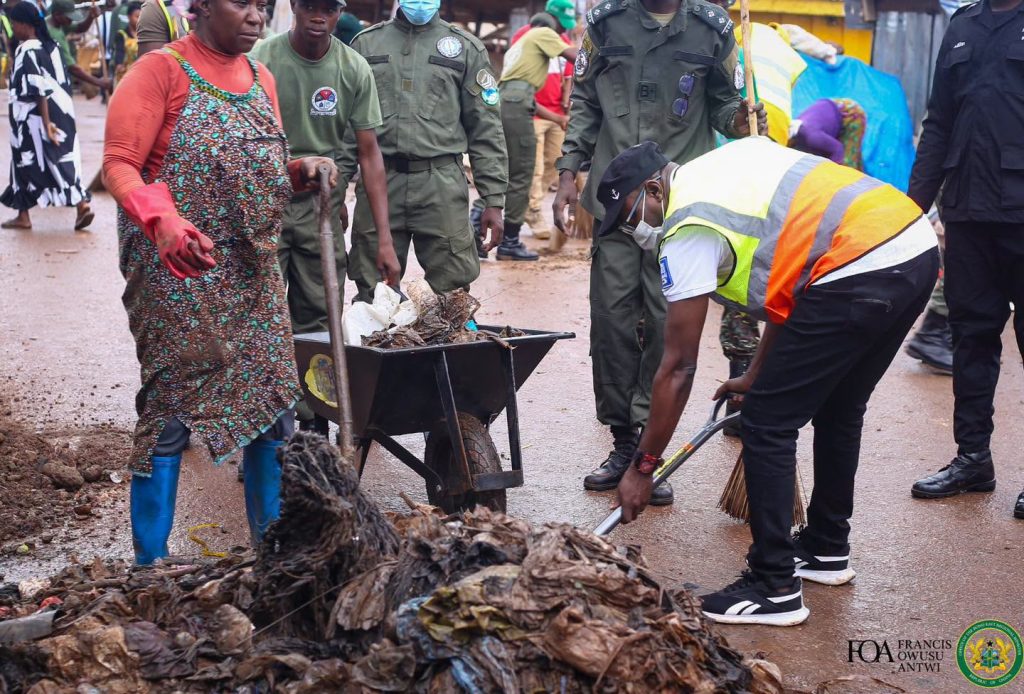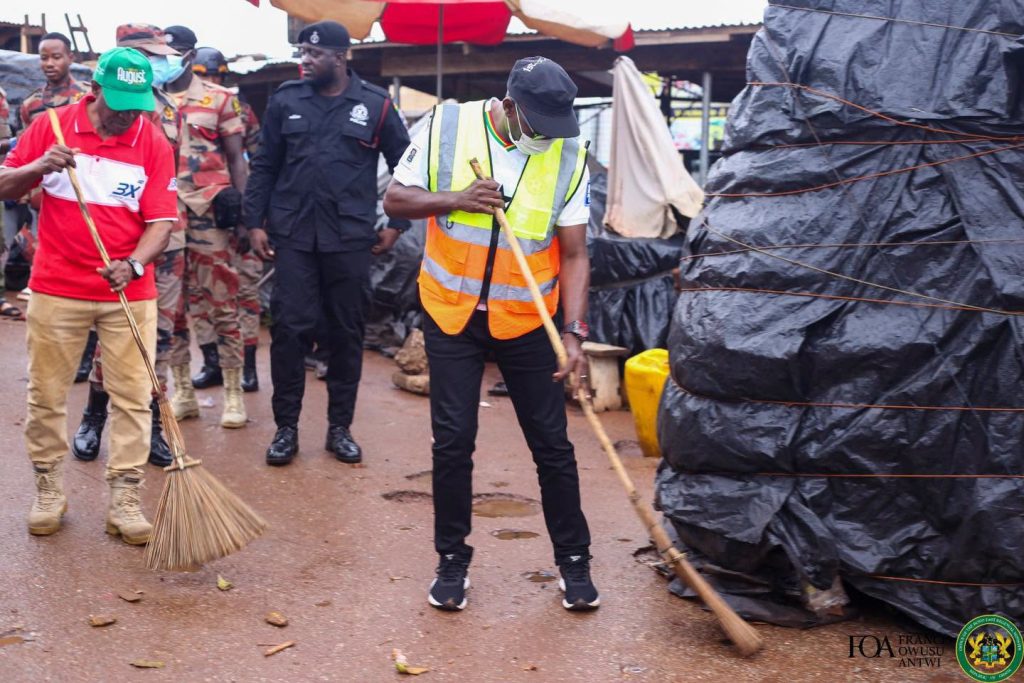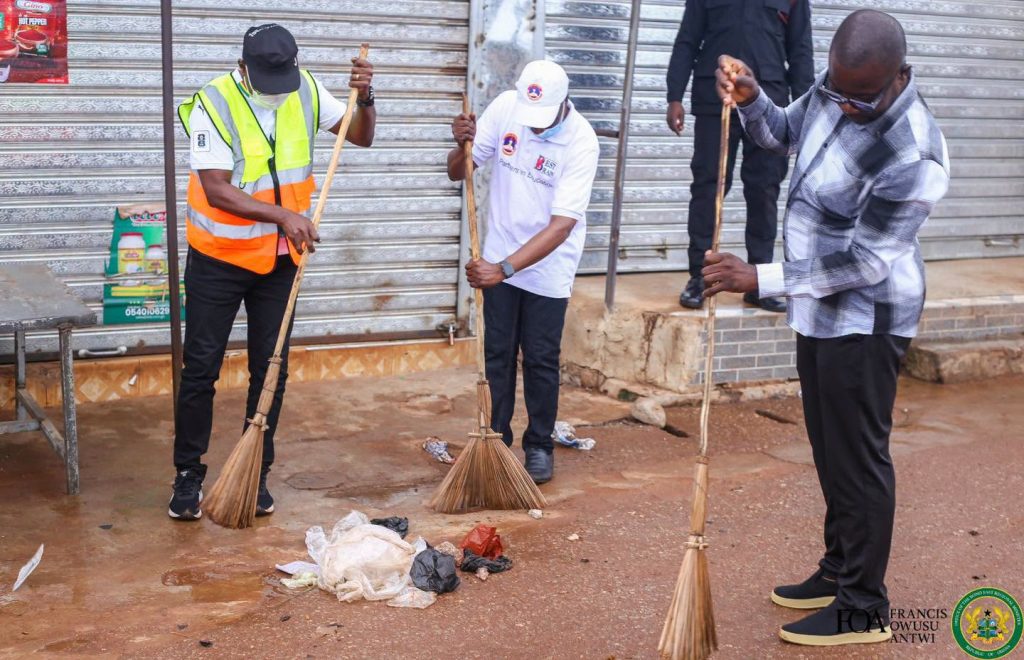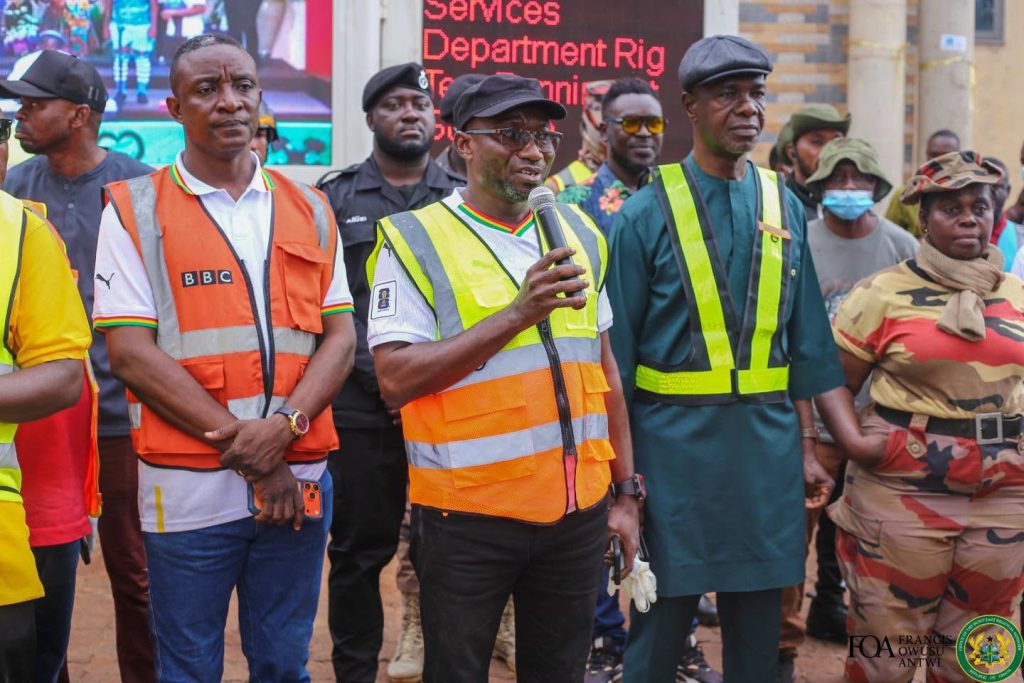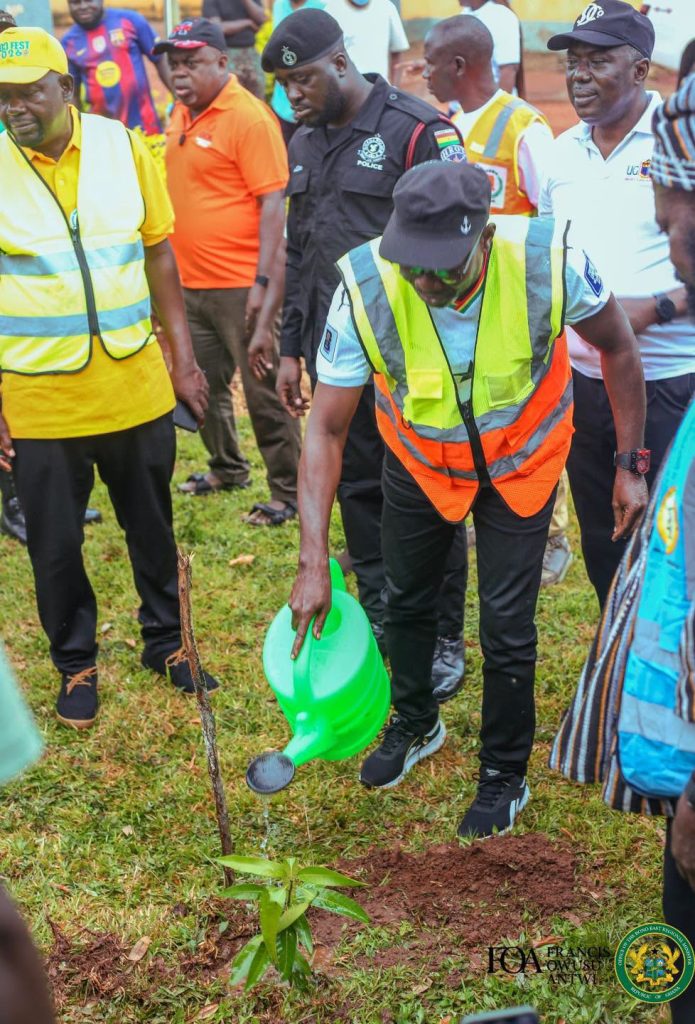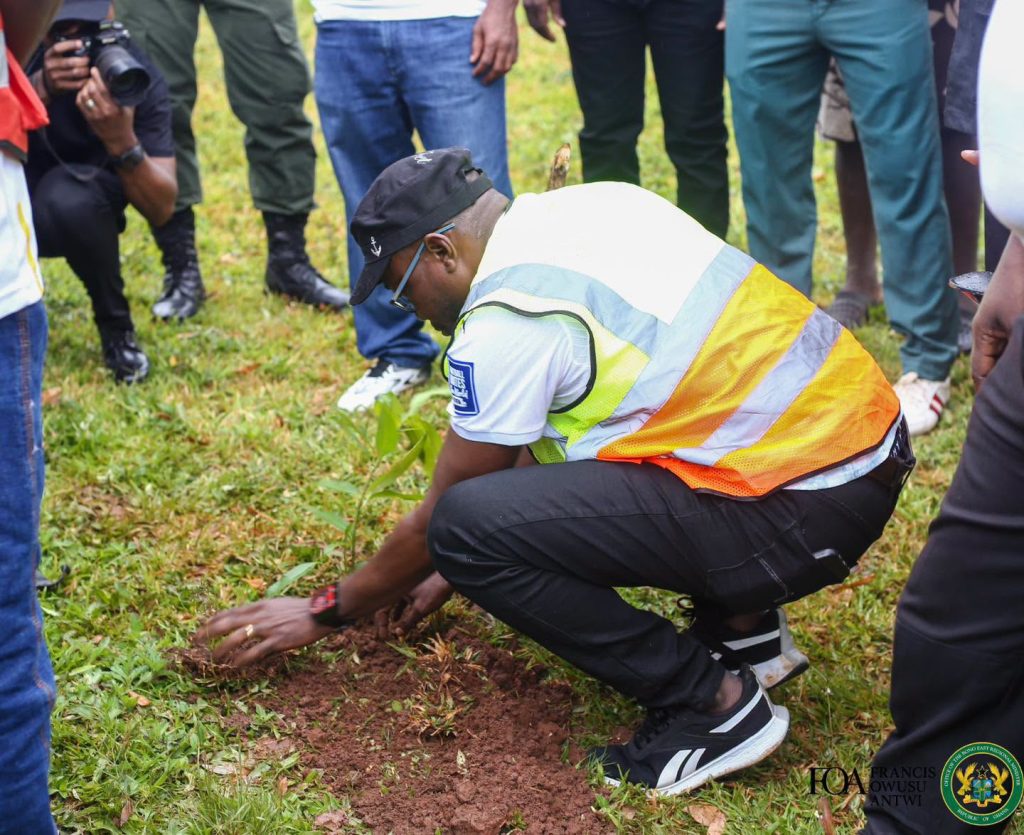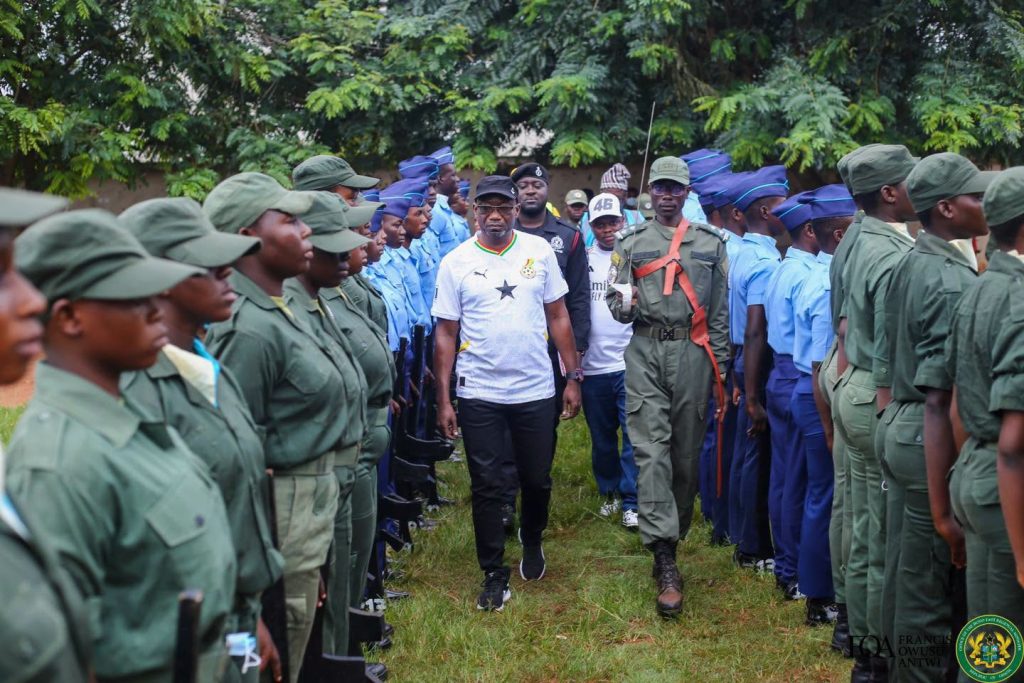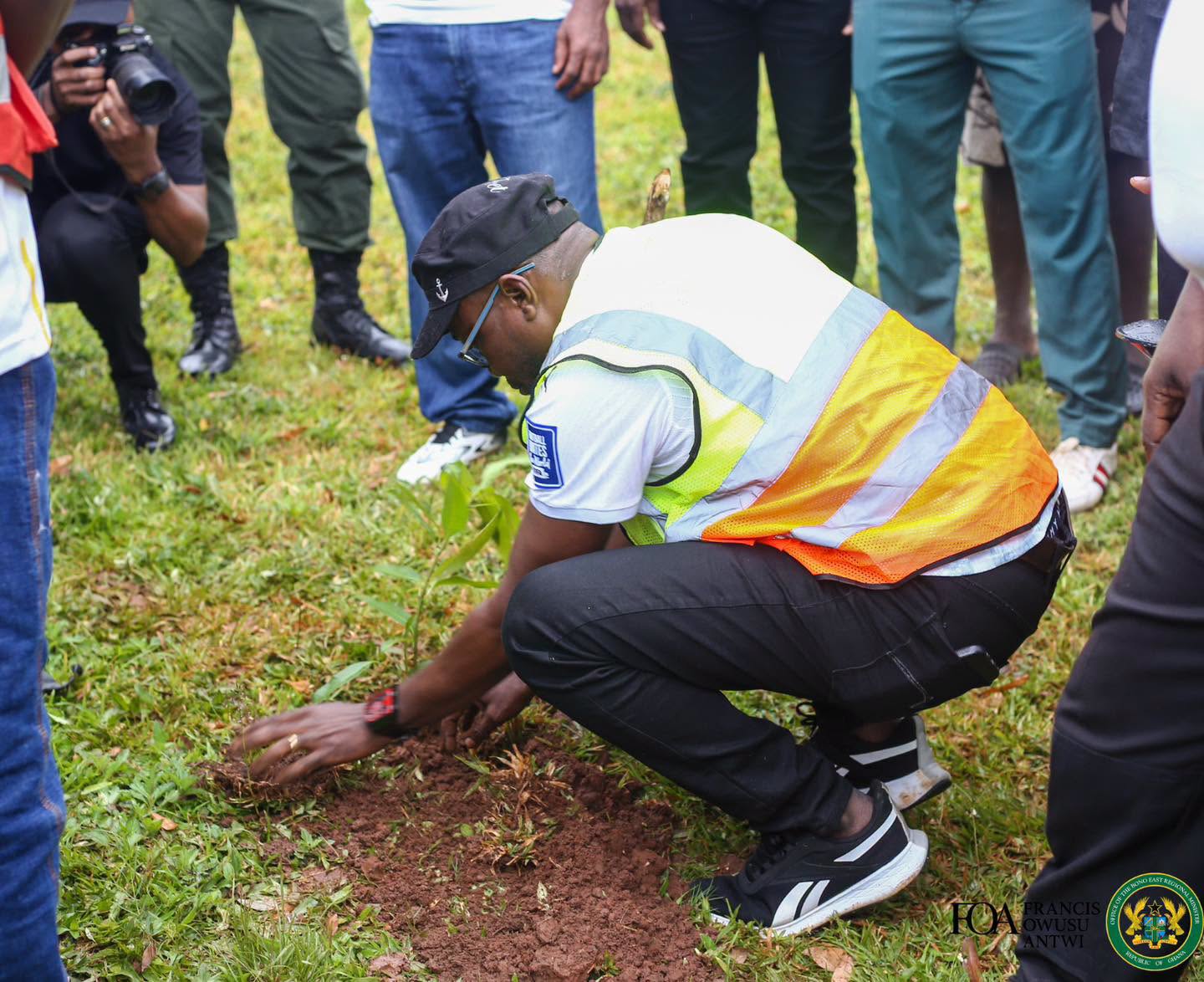
The Bono East Regional Coordinating Council (RCC), in collaboration with Metropolitan, Municipal and District Chief Executives (MMDCEs), traditional authorities, students, civil society organisations, and residents, commemorated Ghana’s 66th Republic Day with a region-wide clean-up and tree planting exercise.
The initiative reaffirmed the region’s commitment to environmental sustainability, public sanitation, and the national vision of creating a cleaner and greener Ghana. Participants undertook clean-up activities in communities and planted trees to support ongoing afforestation and climate resilience efforts.
Speaking during the exercise, the Bono East Regional Minister emphasized that Republic Day is a reminder of Ghana’s journey to self-liberation and the collective responsibility of citizens to contribute to national development. He reiterated the region’s commitment to the Government’s Resetting Agenda and the Green Ghana vision championed by His Excellency John Dramani Mahama, aimed at restoring degraded lands and promoting environmental conservation.
As part of the national target of planting 30 million trees in 2026, Bono East is intensifying tree planting across the region, including the expansion of fruit-bearing trees in schools and communities. The Minister noted that 355,480 seedlings were planted across the region’s 11 Metropolitan, Municipal and District Assemblies last year and expressed confidence that this year’s target would be surpassed.
He stressed that planting trees alone is not enough, urging citizens, particularly the youth, to nurture and protect the trees to ensure their survival and long-term environmental benefits.
The Minister also highlighted the importance of maintaining clean surroundings through the Community-Led Total Sanitation (CLTS) approach, which seeks to improve hygiene and eliminate open defecation across the region.
The Bono East RCC called on all residents to make environmental cleanliness and tree planting a continuous civic responsibility, fostering a healthier, greener, and more sustainable future for generations to come.